NEW · Clinical Studies Software. Remote skin studies at scale. Explore –>


For decades, the in-store beauty advisor was the primary channel through which consumers received personalized skincare guidance. The advisor would observe your skin, ask about your routine and concerns, and recommend products from the brand's range - a process that was slow, variable in quality, dependent on staff knowledge, and impossible to scale online.
That model has now fundamentally changed.
The global beauty tech market was valued at $66.16 billion in 2024 and is projected to reach $172.99 billion by 2030, growing at a CAGR of 17.9% (Grand View Research, 2025). A significant driver of this growth is AI-powered virtual skin consultation: technology that replicates - and in several ways improves on - the judgment of a trained beauty advisor, at any scale, available 24/7, through any digital channel.
This article explains what virtual skin consultation is, how the technology behind it works, what brands need to build it, and why it is becoming a standard expectation rather than a differentiator.
A virtual skin consultation is an AI-powered interaction in which a consumer's skin is analyzed, their concerns are identified, and personalized product recommendations are generated - without a human advisor and without a physical visit.
The process typically unfolds in one of two ways:
Image-based: The consumer takes a selfie. A computer vision model analyzes the photograph and generates a skin profile: skin type, concern severity (acne, redness, pigmentation, wrinkles, dark circles, pore visibility), hydration level, and other measurable parameters. That profile then drives product recommendations matched to the specific skin condition.
Conversational: The consumer answers a structured skin quiz or engages with an AI chatbot that asks about their concerns, current routine, skin sensitivity, lifestyle factors, and goals. The answers are used to build a profile that drives recommendations.
The most sophisticated implementations combine both: a face scan establishes the objective baseline, and a conversation adds the subjective context that parameters alone cannot capture.
Unlike a product recommender - which simply suggests items based on browsing behavior or purchase history - a virtual skin consultation is built on dermatological logic. A systematic review of AI-powered skincare recommendation systems found that image-based approaches consistently outperform collaborative filtering on personalization accuracy, particularly for consumers with atypical or combination skin presentations (Ramrakhiani & Kalbande, 2024, SAGE Open Medicine). The recommendations are grounded in what a specific person's skin actually needs, not in what they have previously bought or what is most popular.
The limitations of in-store consultation as a primary personalization channel are structural, not operational.
Physical presence: A consumer browsing a brand's website at 11pm has no access to guidance. The consultation channel is only available during store hours, in locations where the brand has a physical footprint.
Advisor variability: A study published in the Journal of Cosmetic Dermatology found that traditional skin assessment methods "are inherently subjective, resulting in variable results, particularly in multi-center or international settings" (Pooth et al., 2025). Two advisors may reach different conclusions from the same skin condition, and neither has a standardized methodology for quantifying what they observe.
Scale ceiling: Training a network of qualified skin advisors is expensive, slow, and bounded by geography. A brand cannot meaningfully scale a human-led consultation model across 40 markets without losing quality control. Research on aesthetic medicine decision support confirms that human clinical assessment introduces interobserver variability that AI systems do not, making standardized at-scale deployment structurally impossible with human labor alone (Al-Dhubaibi et al., 2025, Journal of Cosmetic Dermatology).
No data capture: An in-store consultation leaves no structured record. The brand cannot analyze what skin concerns drove which purchases, cannot re-engage the consumer based on their skin profile, and cannot improve its recommendation logic over time.
AI-powered virtual consultation removes all four constraints. It is available at any time, through any device, in any market, in any language - and it produces structured data that compounds in value with every consultation.
A production-grade virtual skin consultation system has four components. Understanding each is important for brands evaluating which platform to build on.
Before any analysis begins, the input image must meet a minimum quality standard. Consumer selfies are notoriously variable: inconsistent lighting, angled captures, blur from movement, and poor framing all degrade model accuracy. A model receiving a low-quality photograph will produce unreliable output regardless of how sophisticated the underlying architecture is - and unreliable output breaks consumer trust faster than no recommendation at all.
Leading platforms use an active image quality layer that runs before the photo is submitted. Haut.AI's LIQA™ (Live Image Quality Assurance) technology monitors the camera feed in real time and provides the consumer with corrective guidance - adjusting lighting, face position, and distance - before the shutter fires. Photos that do not meet the required standard are not submitted to the analysis model. This single layer accounts for a significant portion of the accuracy difference between deployed consumer skin analysis tools.
LIQA™ also enforces a three-angle capture protocol: front and both 45-degree profiles. This multi-angle approach increases parameter stability by approximately 30% compared to single-angle analysis and ensures complete coverage of all facial zones. The same standardized capture methodology used in Haut.AI's consumer products is deployed in DCT clinical trial environments, where measurement reproducibility is a regulatory requirement - not a nice-to-have.
The AI model ingests the standardized photograph and generates a comprehensive skin profile across multiple parameters. Deep learning approaches applied to skin analysis have matured rapidly: a 2024 study demonstrated that CNN-based architectures for cosmetic skin assessment can match the diagnostic performance of 145 dermatologists and outperform 136 of 157 specialists on standardized test sets (PMC11064925). At FSA 3.0 standard, this includes: breakouts and acne severity, dark circles, eye area aging markers, pigmentation and dark spots, pore density and size, redness, sagging, skin tone, skin type classification, wrinkles and fine lines, perceived age, and additional parameters in the advanced tier.
The depth of the training dataset matters more than almost any other technical specification. Haut.AI's FSA 3.0 is trained on over 3 million clinically annotated skin images across diverse ethnicities, skin tones, and age groups - validated against VISIA clinical hardware. This translates directly to 98% diagnostic accuracy across parameter types. A model trained on fewer images, particularly on a narrower demographic range, will produce less accurate results for consumers whose skin characteristics were underrepresented in training.
Output format is also critical for brand utility. FSA 3.0 delivers five distinct output representations from the same underlying model: Tags (categorical labels for consumer UX), Grades (A–E scoring for product fit logic), Masks (pixel-level overlays for visualization), Scores (continuous 0–100 values for R&D applications), and Statistical Values (clinical-grade distributions for longitudinal research). Clinical output enables longitudinal tracking across consumer touchpoints. Consumer-facing output powers the recommendation layer. The same underlying model produces both, which means brands investing in skin analysis infrastructure today are also building a clinical research asset.
Skin analysis is only valuable if it drives the right product recommendation. This is the component that most often fails in deployed systems: a technically sophisticated analysis model connected to a primitive recommendation logic. Research validating machine learning-driven skincare recommendation in a randomized controlled trial found that the gap between AI-generated and advisor-generated recommendations narrows significantly when the recommendation layer is trained on dermatologist-validated product-to-condition mappings - but widens when it relies on collaborative filtering alone (JMIR Dermatology, 2025).
A production recommendation engine does the following:
Haut.AI's Deep C.A.R.E. recommendation engine uses a weighted multi-signal formula: S(p) = w₁ × priority_norm + w₂ × overlap_norm + w₃ × basic_care_flag, with configurable weights (defaults: w₁=0.6, w₂=0.3, w₃=0.1) that allow brands to adjust how aggressively the system prioritizes concern severity versus ingredient overlap versus baseline care requirements.
Hard filters run first - any product incompatible with the consumer's skin type or flagged sensitivities is excluded before scoring begins. A budget-constrained routine builder then applies Multiple-Choice Knapsack optimization to select the highest-value product combination within a price ceiling, ensuring that the recommended routine is realistic for the consumer's stated budget, not just technically optimal.
Where the consultation happens is as consequential as how it runs. Virtual skin consultation is not a single touchpoint - it is a capability that should be available across the full consumer journey.
Website widget: Embedded in the brand's product discovery flow, a selfie-based skin analysis can redirect a consumer from generic browsing to a personalized product page in under ten seconds. In an RCT study evaluating ML-based skincare recommendations for acne management, the AI recommendation group showed significant improvements in Investigator's Global Assessment scores (P=.04) and a reduction in Dermatology Life Quality Index from 7.75 to 3.5 (P<.001) over 8 weeks - trained on a dataset of 65,000+ individuals (JMIR Dermatology, 2025).
Applied to e-commerce, the same logic holds: consumers receiving recommendations calibrated to their actual skin profile are measurably more likely to experience positive outcomes, which drives both conversion and long-term retention.
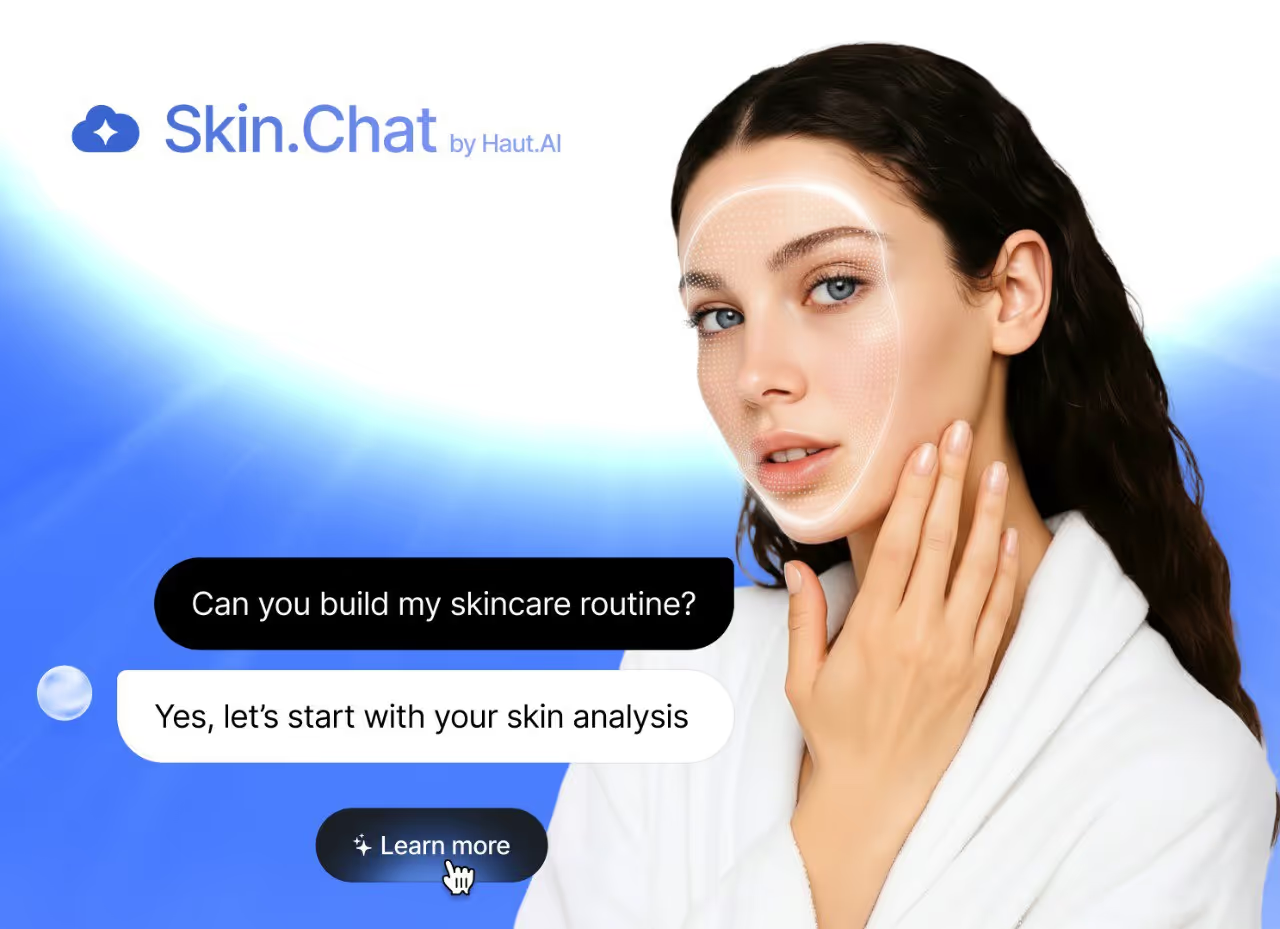
Messaging channels: Virtual consultation delivered via WhatsApp or Instagram Direct Messages reaches the consumer where they already are, not where the brand's website is. Haut.AI's Skin.Chat deploys the same skin analysis and recommendation capability across Instagram DM, WhatsApp, and brand website widget, giving consumers continuity across channels and brands a single integration to maintain.
Brands using Skin.Chat report that the AI consultation layer adds an average of +7.4 minutes per browsing session, with consumers discovering 27% more products during a single session and converting at 2.5x the rate of non-consultation browsing sessions. The channel effect also compounds: Skin.Chat operates 24/7, in 20+ languages, across every market - without incremental staffing costs.
In-store tablet or kiosk: Physical retail is not disappearing, but its advisory model is changing. A tablet running AI skin analysis at a beauty counter enhances advisor guidance with objective data, reduces reliance on individual advisor expertise, and creates a digital record of each consultation for CRM capture - the in-store version of the first-party data flywheel that virtual consultation builds at scale.
The business case for virtual skin consultation is measurable. These are documented outcomes from deployments, not projections.
Conversion lift. One of the leading retailers of luxury beauty products in Europe achieved a +396% increase in conversion rate and +29% growth in average order value. A renowned, science-led beauty brand recorded a 3.6x increase in conversion with a +48% AOV uplift. A well-known UK health and beauty retailer saw a +100% conversion lift. McKinsey's analysis of generative AI applications in retail confirms that AI-driven personalization can improve conversion rates by up to 40% - consistent with the range these deployments demonstrate (McKinsey, 2024).
AOV and basket depth. A fast-scaling skincare brand deploying Haut.AI's recommendation engine recorded +52% more items per order and a 24x ROI on infrastructure investment. When the recommendation logic builds a complete routine rather than suggesting a single product, basket size grows structurally - not through upsell pressure, but because the system identifies what the full skin profile actually needs. AI-powered recommendation deployment by a major American skincare brand drove a +40% AOV increase in the China market and sustained 2x higher conversion rates overall.
Return reduction. The primary driver of product returns in skincare is mismatch: a consumer buys a product based on incomplete information, it does not work for their skin, and they return it. When the recommendation is grounded in an objective analysis of their actual skin condition, the mismatch rate falls. A 2024 study on AI's role in reducing purchase uncertainty in beauty categories found that AI-driven pre-purchase personalization significantly reduced post-purchase dissatisfaction, particularly for complexion products where skin-product compatibility is critical (ScienceDirect, 2024).
First-party data. A virtual skin consultation generates structured, permission-based data: skin type, concerns, concern severity, product history, routine preferences. Consumer willingness to share this data is higher than for general behavioral tracking - a 2025 study of UK and Irish consumers found that trust in AI recommendations for personal care products is significantly mediated by the perceived relevance and accuracy of the recommendation, with accuracy perceptions driving disclosure willingness (Tandfonline, 2025).
Skin profile data can be used to segment email flows by concern, retarget by skin type, build lookalike audiences, and inform product development with real aggregate data from the brand's actual consumer base.
24/7 scalability. A trained human advisor can conduct perhaps 15 consultations per day. An AI system conducts as many as demand requires, in 20+ languages, across every market the brand operates in, with no incremental cost per consultation. For brands operating in multiple geographies, this removes the staffing ceiling that caps in-store consultation quality.
The frontier of virtual skin consultation is moving beyond recommendation into simulation.
Research on augmented reality try-on technology in cosmetics finds that visual outcome simulation significantly increases purchase intention and reduces return rates across beauty categories (Frontiers in Virtual Reality, 2025). A parallel stream of research shows that AI-powered virtual try-on tools have a direct positive effect on impulsive buying in beauty e-commerce, mediated by reduced purchase anxiety and increased product-self congruence (MDPI Sustainability, 2025).
Haut.AI's SkinGPT takes this further: it generates photorealistic visualizations of how a specific product or ingredient will affect a consumer's skin - rendered on their actual face, before purchase. The ingredient effect library currently maps 29 distinct effects across 11 ingredient types, including Retinoids, Vitamin C, Niacinamide, Bakuchiol, Azelaic acid, and Hyaluronic acid.
At In-Cosmetics Global 2026, Givaudan Active Beauty used SkinGPT to show visitors the effect of their PrimalHyal NeuroYouth ingredient on their skin in real time - the first public deployment of ingredient-specific skin simulation at a major industry event. For a consumer deciding between two serums, the question "which one will actually help my skin?" is no longer rhetorical.
The clinical implications extend beyond commerce. MDPI Cosmetics' 2025 analysis of AI in cosmetology notes that ingredient simulation tools represent a new category of consumer education infrastructure - moving product claims from brand assertion to personalized visual evidence (MDPI Cosmetics, 2025). SkinGPT closes the last remaining gap between in-store and digital consultation: the ability to demonstrate, not just recommend.
For brands in vendor evaluation, five questions cut through most of the noise:
1. What is the training dataset? Volume and demographic diversity determine model accuracy. A platform trained on 50,000 images will behave differently from one trained on 3 million+ across diverse skin tones. Ask for validation methodology, not just headline numbers. For reference, FSA 3.0 is validated against VISIA clinical hardware and achieves 98% diagnostic accuracy across the parameter set.
2. How is image quality controlled? If the platform accepts any selfie and runs analysis on it, the results will be inconsistent. Look for an active pre-capture quality layer - like LIQA™ - that enforces standards before the model sees the image. The absence of this layer is often what separates consumer-facing demos from production-grade deployments.
3. What does the recommendation logic look like? "AI-powered recommendations" can mean anything from collaborative filtering to a weighted scoring formula. Ask how the engine handles catalogue size, routine building, and budget constraints. A system that cannot build a complete routine within a price ceiling is missing the logic that drives basket depth.
4. Which channels does it support? A consultation capability that only works on the brand's website misses the majority of consumer touchpoints in 2026. Evaluate whether the platform extends to messaging apps (WhatsApp, Instagram DM), in-store hardware, and mobile SDKs.
5. What data does the brand own? In an API-first integration, the brand controls and owns the skin profile data generated by every consultation. In a fully hosted third-party widget, that may not be the case. Data ownership determines what can be done with the consultation output across CRM, email, and product development.