NEW · Clinical Studies Software. Remote skin studies at scale. Explore –>


Grupo Boticário has expanded Haut.AI's AI Skin Analysis to approximately 4,000 stores. The decision was made on the strength of 24.
It is one of the largest in-store AI beauty rollouts anywhere in the world. But the interesting part is not only the size of the deployment, it is the 24-store pilot in São Paulo and Rio de Janeiro that produced the result behind it. National rollouts are not won in the announcement. They are won in the pilot.
This partnership is now three years old. It started with an investment, not a purchase order. That sequence matters, and it is worth walking through, because it describes a path that most beauty and retail organizations are currently trying to find.
In 2023, Grupo Boticário's corporate venture capital arm, GB Ventures, participated in Haut.AI's seed financing round alongside investors including LongeVC. Only after that did the relationship progress into product implementation and testing.
That order of operations shaped everything that followed. A supplier is hired to build something already specified. Grupo Boticário was involved before there was anything to specify, which meant the in-store experience could be shaped around what their beauty advisors and customers actually needed rather than around a brief written in advance.
"We invested in Haut.AI not simply as a supplier, but as a partner with whom we could co-create solutions for real consumer needs," said Analu Partel, Director of M&A and GB Ventures at Grupo Boticário. "Our relationship has developed into a three-year strategic partnership that reflects our progress from investment and experimentation to implementation at national scale. By combining Grupo Boticário's beauty and retail expertise with Haut.AI's technology, we are creating more personalized experiences for our customers."
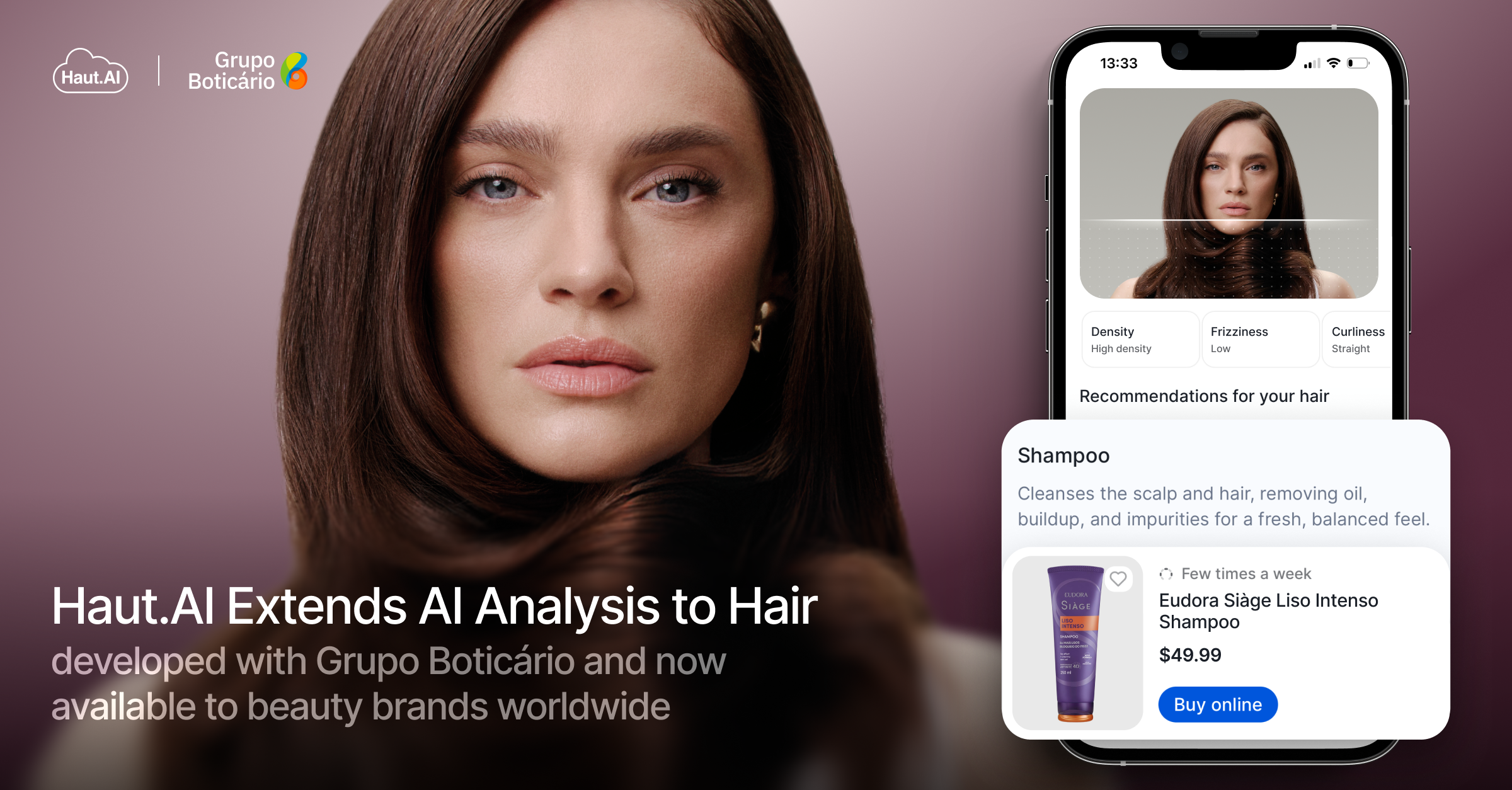
The initial pilot for Meu Botik ran in 24 O Boticário stores in São Paulo and Rio de Janeiro. Meu Botik is O Boticário's in-store skin analysis and product recommendation experience, powered by Haut.AI's technology and used by beauty advisors during customer consultations.
Twenty four stores is small enough to fix things and large enough to learn something real. It is also large enough to show whether advisors keep using the technology after the novelty wears off. That is where most in-store beauty tech quietly fails. Not in testing, but in the weeks after launch when nobody is watching.
Most in-store beauty technology asks the store to change around it. A dedicated station. A device to charge, clean, update and defend floor space for. A separate step in the customer journey that the advisor has to remember to introduce.
Meu Botik runs on the mobile devices beauty advisors already use to complete a purchase. There is no separate station and no dedicated hardware. That is not a cost-saving detail, it is the reason the analysis becomes part of the sales conversation rather than an interruption to it.
The measurement itself is fast enough to hold a customer's attention. In approximately 80 seconds, Haut.AI's technology evaluates more than 150 facial biomarkers and returns results across parameters including hydration, skin tone uniformity and expression lines. Meu Botik then presents a personalized skin assessment that advisors can use to support more individualized consultations and help customers identify products from the Botik skincare line that suit their skin needs.
The advisor is not removed from the conversation. The advisor is given something specific to talk about. A consultation that opens with measured hydration and skin tone uniformity is a different conversation from one that opens with a question about skin type, and the customer can see the evidence for the recommendation being made.
Grupo Boticário's pilot results showed that the AI-powered skin analysis experience increased average skincare order value by approximately 80%.
Following those results, Grupo Boticário approved the expansion across approximately 4,000 stores in Brazil.
That is the part worth sitting with. The expansion decision was not made on the strength of the technology in isolation. It was made because a controlled test in 24 stores produced a commercial signal clear enough to justify a national rollout, and because the experience had already proven it could survive contact with real store conditions.
Running this in 4,000 stores is a different engineering and operational challenge from running it in 24. Three things stop being optional.
"Grupo Boticário's decision to expand from 24 stores to approximately 4,000 demonstrates what can happen when strategic investment, beauty expertise and AI technology are developed together around a clear consumer need," said Anastasia Georgievskaya, CEO & Co-Founder of Haut.AI. "The partnership has progressed from an initial investment to a nationwide retail deployment, with another important milestone coming in September as we bring new capabilities to market."
The pattern behind this rollout is the part worth taking away. The analysis worked because it fit the way the store already ran, not because the store rearranged itself around the technology.
The lesson of this rollout is not that AI skin analysis works. It is that the path from pilot to national deployment is an operational path, not a technical one.
The technology had to be accurate enough to be trusted, fast enough to fit inside a real consultation, private enough to deploy at national scale, and simple enough that it required no new hardware and no new step in the sales process. Every one of those constraints was tested in 24 stores before anyone discussed 4,000.
If your team is weighing an in-store skin analysis programme, the useful question is not which technology has the most impressive demo. It is which one your advisors will still be using in month six.
Book a demo to see how Haut.AI's AI Skin Analysis performs in a retail environment, and what a pilot in your own stores would involve.
Meu Botik is O Boticário's in-store skin analysis and product recommendation experience, powered by Haut.AI's AI Skin Analysis. Beauty advisors use it during customer consultations to produce a personalized skin assessment and help customers identify personalized product recommendations from the Botik skincare line that suit their skin needs.
Approximately 4,000 O Boticário stores across Brazil. The rollout followed a pilot in 24 stores in São Paulo and Rio de Janeiro.
Grupo Boticário's pilot results showed that the AI-powered skin analysis experience increased average skincare order value by approximately 80%. Those results led Grupo Boticário to approve the national expansion.
Approximately 80 seconds. In that time, Haut.AI's technology evaluates more than 150 facial biomarkers and returns results across parameters including hydration, skin tone uniformity and expression lines.
No. Meu Botik runs on the mobile devices beauty advisors already use to complete a purchase. There is no dedicated station and no separate device to install, charge or maintain.
Consumer images are anonymized through Haut.AI's patented Skin Atlas technology, which analyzes visible skin characteristics rather than personal identity.
Three years. Grupo Boticário's corporate venture capital arm, GB Ventures, participated in Haut.AI's 2023 seed financing round alongside investors including LongeVC. The relationship progressed from that investment into product implementation, testing, and now national deployment.
Haut.AI's technology is trained on more than 3 million validated clinical images, which is what allows results to stay reproducible across thousands of locations and the full range of skin tones.